

Known as the Sunshine State, Florida holds the third-largest state prison population in the United States with 87,000 individuals currently incarcerated, and many sitting on the States death row, today we look at ten of the most dangerous prisons and their deadly inmate populations.
9 – Taylor Correctional Institution
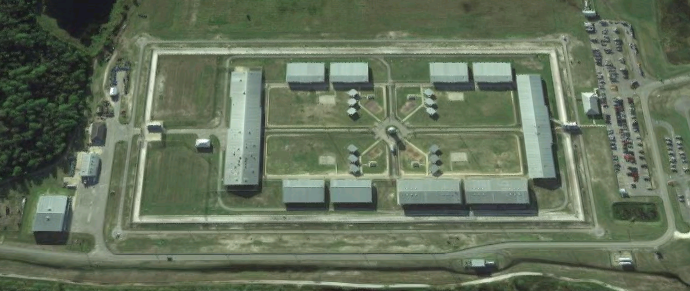
Cementing its notorious reputation within the Florida penal system, Taylor Correctional Institution is located in Perry, Taylor County, and is known for its intense gang activity and severe staffing shortages.
The prison itself opened in 1994 as part of Florida’s massive prison expansion era during the 1990s and was designed with a maximum capacity of 1,301 inmates over various security levels.
It originally operated as a “Youthful Offender” facility, specifically designed to house and rehabilitate younger inmates between the ages of 14-24, but due to shifting population needs and rising security logistics, it moved to an adult prison.
Thanks to upgrades, the prison can now hold a larger population thats closer to 2,710 inmates, but institutional violence, contraband smuggling, and officer-involved misconduct have all played a part in its reputation.
In 2014, two guard supervisors were arrested and charged with multiple felonies after orchestrating a hit on an inmate named David Powell who discovered that the officers were running a contraband operation inside.
When Powell threatened to expose the operation to the FDC’s Inspector General, the guards took action and used their authority to manipulate cell assignments and deliberately ordered gang-affiliated inmates to execute Powell.
Powell was ambushed and stabbed on two separate occasions by other inmates but survived both attacks against all the odds without fatal injuries and managed to alert investigators.
Apart from Powell, there is only one notable inmate to mention here, with Michael King, the convicted kidnapper and murderer of Denise Amber Lee, spending time embedded in one of the prisons close custody units.
8 – Franklin Correctional Center
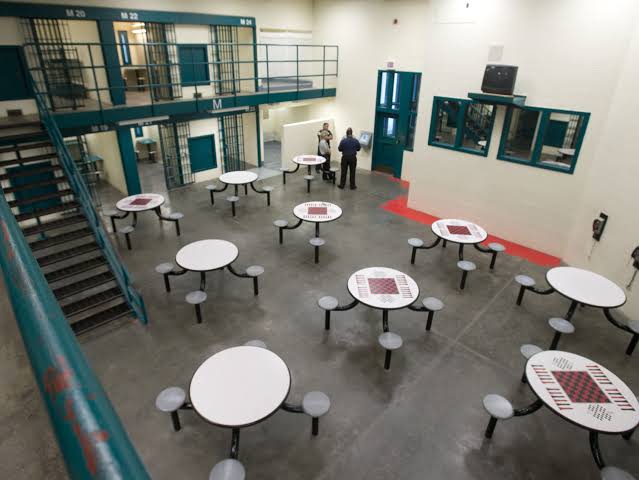
A relatively modern facility compared to some of Florida’s century-old prison farms, Franklin has developed a reputation for extreme volatility and violent unrest with a maximum capacity of 1,346 inmates.
At the turn of the 21st century, the Florida Department of Corrections faced a rapidly growing inmate population and a severe shortage of close-management beds and the answer to this was a new prison in Franklin County.
Construction officially began in 2004 with an estimated price tag of $53 million utilizing concrete housing dorms, radial razor-wire perimeters and specialized confinement units that opened in 2005.
Despite its modern construction, Franklin Correctional Center quickly became one of the most volatile facilities in North Florida, with 2016 becoming one of its worst years in living memory.
In October 2013, the prison found itself at the center of a massive statewide security scandal, with six prisoners inside the jail being exposed in a fraud ring that forged official court release documents.
Between June and November 2016, two riots occured at the facility, with the June 9th incident seeing a catastrophic riot involving 300 inmates that saw prisoners drilling through concrete walls that separated housing areas.
The rioting inmates completely seized and destroyed two entire housing dormitories with a two-hour standoff ending the siege and costing the prison hundreds of thousands of dollars.
7 – Columbia Correctional Institution
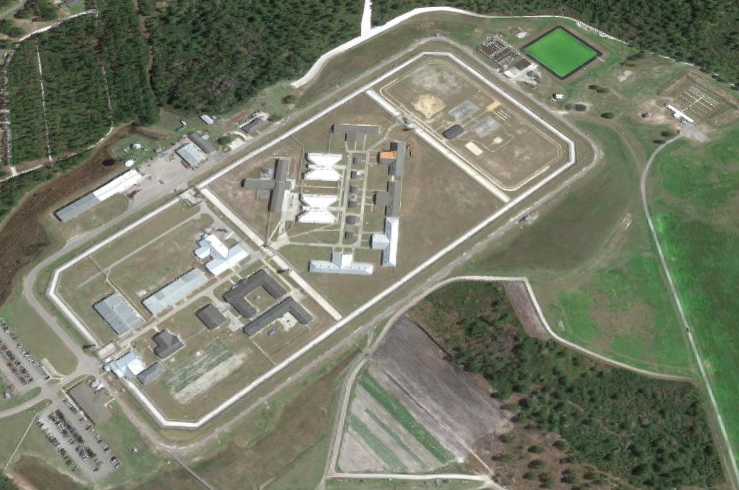
Designed to provide secure housing and a variety of rehabilitative programs, infrastructure at this facility has severely deteriorated to the point that a wave of inmate complaints forced Florida State Representative David Richardson to conduct a surprise visit in 2016.
Richardson publicly condemned the living conditions, describing parts of the prison as completely “unfit for human habitation,” and, the prison was also the backdrop for some of the most gruesome and bizarre incidents in modern American penology.
On March 18th, 2012, 24-year-old Corrections Officer Sergeant Ruben Thomas was checking cells in the facility’s Annex, when Richard Franklin, an inmate serving a life sentence for first-degree murder, attacked him fatally.
A highly unusual security breach occurred in March 2014, when gunfire erupted inside a housing cell and Inmates Kirk Cartwright and Deshandre Billups, later found to have shot each other using smuggled weapons.
Cartwright and Billups intentionally shot themselves in a bizarre conspiracy to sue the FDC for damages and attempt to get their sentences reduced, yet they both ended up receiving more time.
One of the facility’s youngest inmates is also convicted murderer Michael Hernandez, who was convicted of the shocking 2004 first-degree murder of his 14-year-old classmate Jaime Gough in the school’s bathroom.
Another convicted murderer, Randy Schoenwetter, was responsible for the brutal double murder of Ronald and Virginia Friskey in their home and was held at the prison on death row before he was resentenced to life without parole.
6 – Dade Correctional Institution
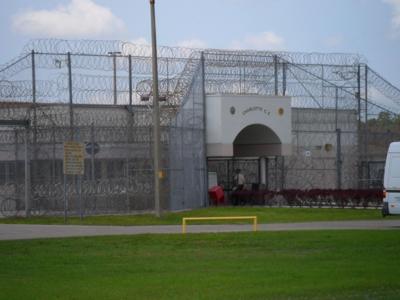
From its inception, Dade Correctional Institution has faced chronic staffing shortages, high employee turnover and a rapidly expanding prison population with over 1,000 adult male inmates currently housed here.
Unchecked violence began to run away at this prison between the late 2000’s and early 2010’s, with incidents of guards using physical violence as a primary tool of compliance, particularly within the psychiatric units.
Harold Hempstead is one of the most significant figures in modern American prison whistleblowing, who, while serving time here, witnessed the horrific 2012 death of Darren Rainey, killed by guards at the prison.
Rainey, who was serving time in the prisons “Transitional Care Unit,” was subjected to a form of punishment by guards, known as “The Shower Treatment” and was locked inside a closed shower with water set to 180 °F.
At least eight other prisoners had also been subjected to a scalding shower within the prison and the whistleblowing resulted in the firing of Warden Jerry Cummings and a sweeping overhaul of the facility.
A notorious hitman for Griselda Blanco’s Medellín cartel, Jorge Ayala was responsible for dozens of contract killings across Miami-Dade County and has served chunks of his life sentence within Dade’s maximum-security sectors.
Triple killer Grant Amato spent a portion of his processing and initial life sentence inside the maximum-security housing unit after his conviction for killing three members of his family.
5 – Union Correctional Institution
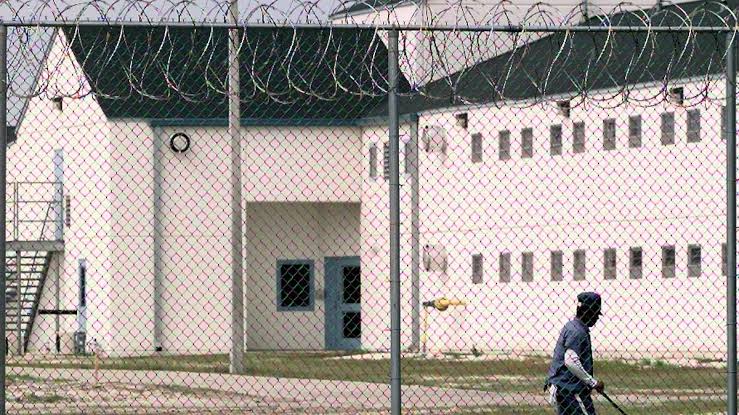
Commonly known as Raiford Prison, this site formally opened in 1913 and was one of the last prisons in the United States to abolish the practice of convict leasing, ending the tradition in 1923.
Union remains one of the largest prisons in the Florida system and houses a maximum of 2172 male inmates,with it covering pretty much every security classification in the system and the state’s death row.
The prison was officially known as Raiford Penitentiary, but was often called the “State Prison Farm” as inmates duties often routinely included farming the 18,000-acre prison layout.
The site saw a death row section constructed in 1992, coinciding with the relocation of inmates from the State Prison next door and today, many of these original buildings are still used.
More than half of the inmates inside this prison are black, with racial tension often a problem because over 75% of the guards are white and several officers and inmates reported a clique of racist guards.
American former chemist and computer programmer, George James Trepal was formally a guest here and was convicted of poisoning the Carr family by adding thallium to multiple bottles of Coca-Cola, killing Peggy Carr.
Notorious murderer and one of the prisons most dangerous inmates, Wade Wilson was sentenced to 2 death penalties for the murder of two women in 2019 and is known as “The Deadpool Killer.”
William Edward Wells III is another inmate on the prisons death row, with a victim count of seven, he earned the nickname the “Monster of Mayport,” and killed another prisoner at Florida State Prison.
4 – Charlotte Correctional Institution
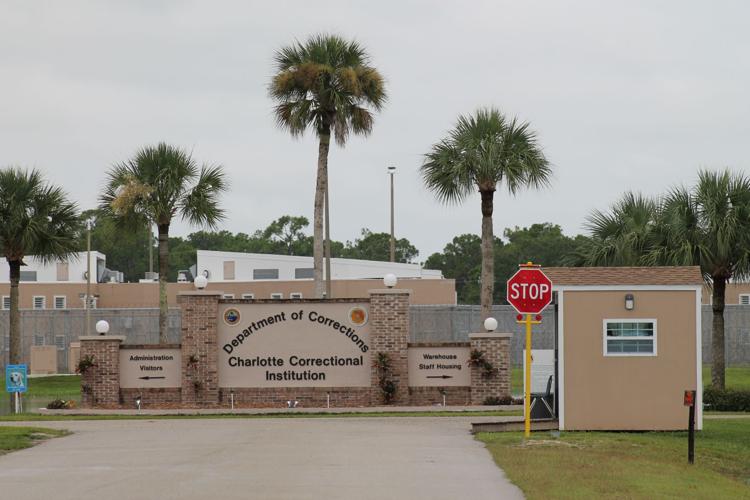
Since opening its gates in August 1989, Charlotte Correctional Institution has suffered catastrophic lapses in security and has hosted a roster of highly notorious and dangerous inmates.
Skyrocketing incarceration rates and stricter sentencing laws have seen the population at Charlotte explode, with a double-perimeter chain-link fence system separated by dynamic razor-wire coils and extensive electronic surveillance keeping those inside.
Crucially, this prison serves as a primary site for “Close Management” inmates, Florida’s classification for prisoners who require long-term segregation due to severe behavioral problems and gang affiliations.
On June 11th, 2003, one of the most infamous and brutal events in the history of Florida corrections unfolded at this prison, with Correctional Officer Darla Lathrem ambushed by five inmates with a sledgehammer.
Officer Lathrem became the first female corrections officer killed in the line of duty in Florida’s history and two other inmates, who attempted to save her life were also beaten, with one passing away in hospital.
This prison is known for housing some dangerous individuals and one such inmate, Tony Ables, was convicted of multiple homicides in the Tampa Bay area, killing four people, but having his death sentence overturned by the judge due to mental health.
Ables has been linked to the murders of Adeline McLaughlin and Deborah Kisor through DNA profiling, but he has yet to be charged and the police believe he is connected to other crimes in the area.
3 – Gulf Correctional Institution
A major state prison for men, this prison has been a focal point for the regional economy of the Florida Panhandle and, concurrently, a lightning rod for human rights advocacy groups, whistle-blowers, and investigators.
Built by Ajax Building Company, the main unit required a rapid 14-month construction schedule, bringing an 89,555-square-foot footprint featuring open-bay dormitories and specialized T-cell housing buildings.
A major expansion of this facility opened in May 1999 to expand the 1,411 prisoner capacity by a further 720 inmate beds and was named “The Gulf Annex.”
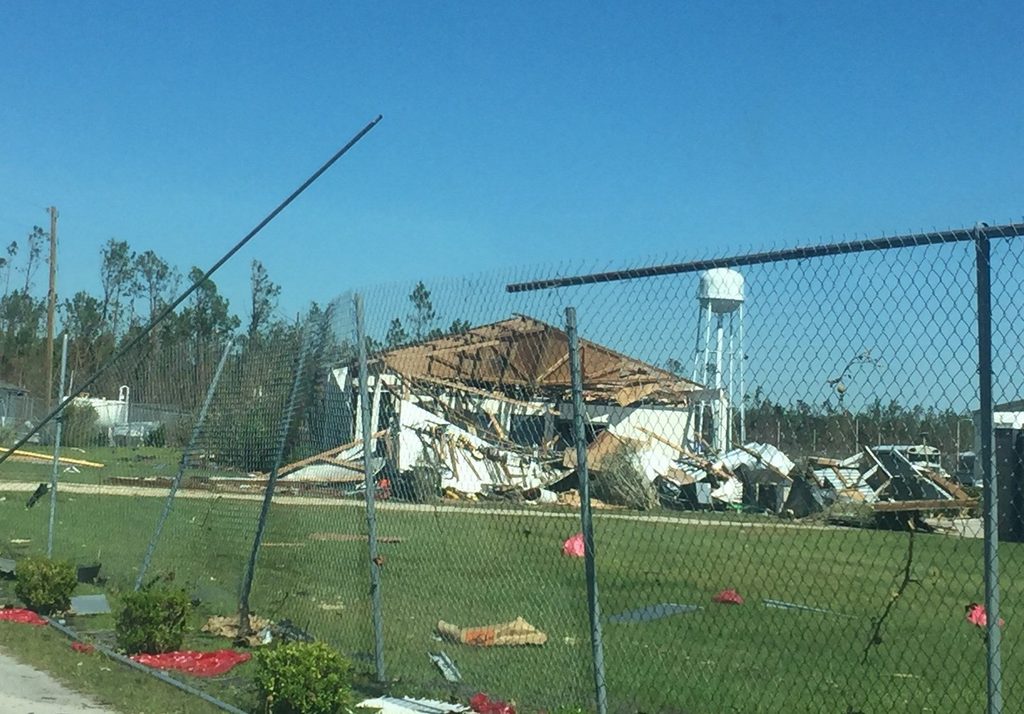
This part of the prison was rendered temporarily uninhabitable by Hurricane Michael in October 2018, but re-opened at the end of 2024, having undergone a full refurb and clean.
Heavy winds caused extensive roof collapses across multiple dormitories and the facility lost power, clean water, and communications sparking panic that followed days of pitch-black isolation and structural instability.
The FDC was forced to completely evacuate the prison population, dispersing inmates across the state and it took 6-years to re-open the unit.
This prison frequently acts as a revolving door for inmates who have carried out severe attacks on staff or orchestrated gang activity at other Florida institutions, however, its notable inmate list is not currently public.
2 – Santa Rosa Correctional Institution
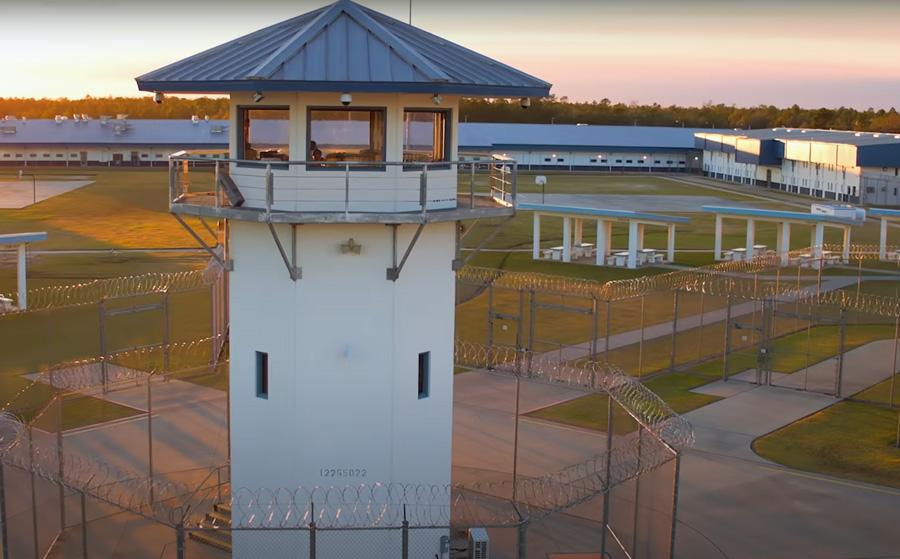
One of the most volatile and dangerous institutions in the American penal system, Santa Rosa Correctional is infamous in Florida State for housing the most disruptive, high-risk, and gang-affiliated inmates in its Close Management facility.
Opened in 1996, the original maximum-security facility houses up to 1,614 close and maximum-custody inmates, but this was not enough to satisfy the growing prison population, and another annex opened in 2006.
The prison, one of the toughest in the state, also shares private land with Blackwater River Correctional Facility, a privately operated institution that was opened in 2010 and holds over 2,000 inmates.
The most infamous event in Santa Rosa’s history occurred on March 30th, 2012, when 24-year-old convicted burglar Ricky Martin, who had just 2-years left to serve was placed in a cell with 6-foot Shawn Rogers.
Within 36 hours of the pairing, Martin was dead and a huge investigation revealed low-risk inmates were being tossed into close-confinement cells with known serial killers to clear out reception centers.
The prison also houses some of the States most dangerous inmates including Anthony Todt, convicted in a high-profile trial for the December 2019 Todt family murders inside the family home and he is serving life without parole.
1 – Florida State Prison
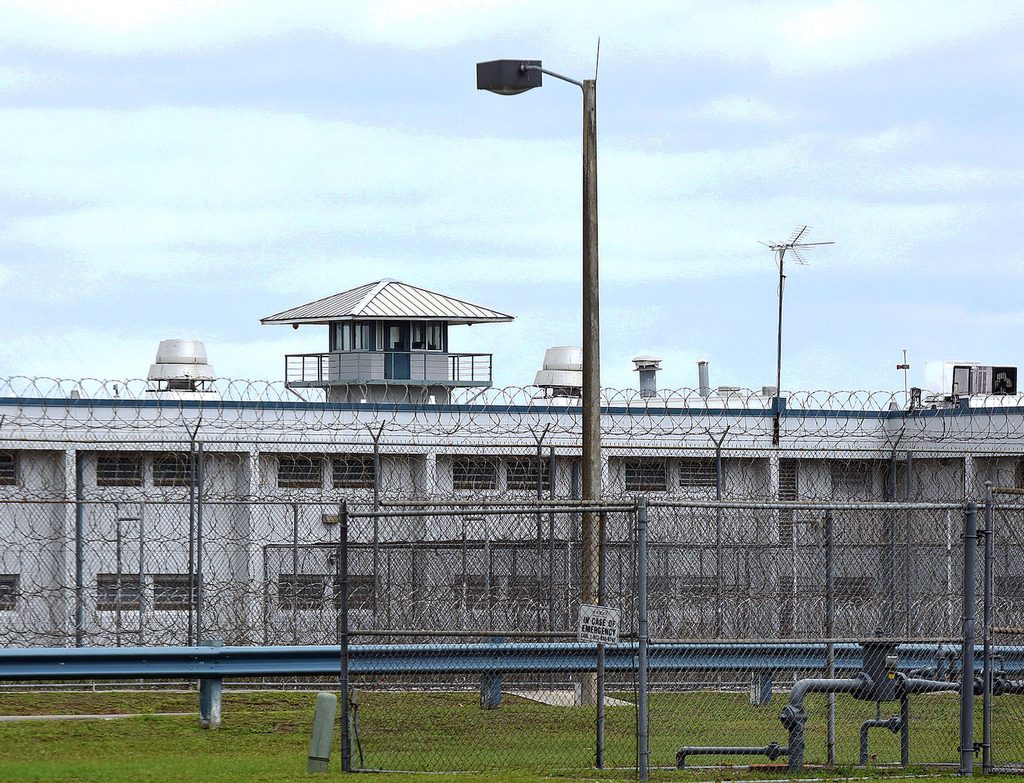
Located in unincorporated Bradford County, this prison contains the second of two death row units and has a capacity of 1,492 inmates, also housing the state’s execution chamber where condemned inmates face lethal injection.
FSP is, by far, the state’s most heavily fortified maximum-security facility and houses only the most dangerous inmates that cannot, safely be held anywhere else with the ultra-secure maximum-security facility completed in 1962.
The site shares its land with both Union Correctional Institution and Raiford prison with 18,000 acres of space that includes the infamous “Cell 1” where condemned prisoners are moved when execution warrant’s are signed.
In 1923, the Florida Legislature outlawed county-level hangings and moved to the electric chair system, which claimed the lives of 240 inmates and later moved to the lethal injection method due to a number of botched electrocutions.
Out of all those who met their end at this facility, one of the most brutal serial killers of the 20th century, Ted Bundy, was executed on January 24th, 1989, with crowds cheering outside.
Aileen Wuornos, dubbed America’s first female serial killer, killed seven men along Florida highways, spent years on death row before being executed via lethal injection on October 9th, 2002.
The Gainesville Ripper, Danny Rolling is another infamous inmate who terrorized the University of Florida campus, killing five students before he was executed on October 25th, 2006.
The Houdini of Florida, Mark DeFriest was originally sentenced to 4-years in prison but is now serving a 34-year stretch in solitary after seven successful escapes from prisons and a further six failed escapes.
Bernard Eugene Giles, now serving a sentence at Tomoka Correctional Institution was another infamous inmate to be held here and also escaped with two other prisoners using smoke grenades he made inside.
Thanks for reading, check out more Vocal articles on our homepage where we publish true crime articles weekly.
Related posts:
 Top 10 Worst Prisons In The US State of Georgia
 46 Most Dangerous Prisoners At ADX Florence Prison
 Top 10 Most Dangerous People Held At Wormwood Scrubs Prison
 Top 10 Most Dangerous Prisoners Held In Full Sutton Prison
 33 Most Dangerous Prisoners Jailed Inside Florida Prisons
 Top Ten Most Dangerous Prisons In California