

Florida’s Bureau of Prisons houses some of the most dangerous prisoners inside America, with many facing death row for their crimes.
33 – Auburn Calloway

On April 7th 1994, Calloway boarded a McDonnell Douglas DC-10 cargo jet as a “deadhead” passenger while carrying a guitar case that concealed several hammers, a spear gun, and a knife.
Before takeoff, Calloway attempted to disable the cockpit voice recorder by pulling its circuit breaker, though the flight engineer noticed and reset it before the flight began.
Approximately 26 minutes after takeoff, while the plane was at 19,000 feet, Calloway entered the cockpit and attacked the three-man crew—Captain David Sanders, First Officer James Tucker, and Flight Engineer Andy Peterson.
Investigators determined that Calloway intended to kill the crew and crash the aircraft. He used blunt-force weapons so the injuries would appear consistent with an airplane crash rather than a struggle, allowing his family to collect a $2.5 million life insurance policy.
At trial, Calloway attempted a defense of temporary insanity, which was unsuccessful, and, on August 11th, 1995, he was sentenced to two consecutive life terms for trying to bring down the aircraft.
On appeal, his conviction for “interference with flight crew members” was vacated because it was ruled a lesser-included offense of “attempted aircraft piracy,” but his life sentence for piracy was affirmed.
As of 2025, Calloway remains incarcerated at the United States Penitentiary, Coleman I, in Florida and is not expected to be released.
32 – Luke Sommer
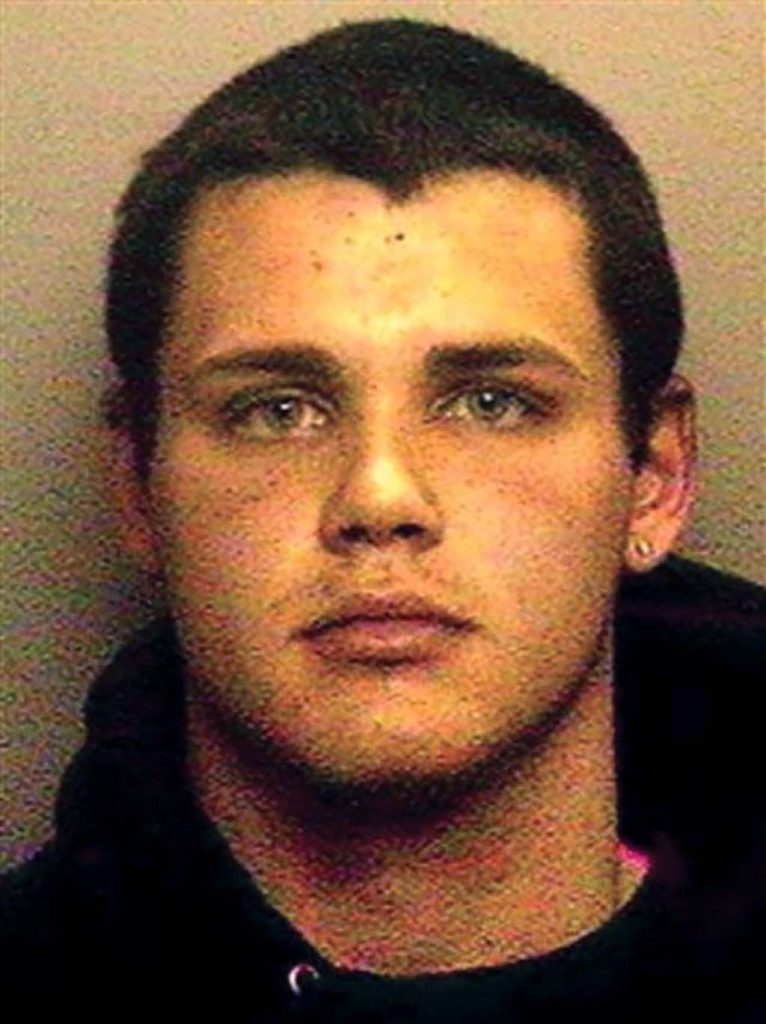
On August 7th, 2006, Sommer led a group of five men in a military-style takeover of a Bank of America branch in Tacoma, Washington.
The group used military precision, wearing soft body armor and carrying fully automatic AK-47 machine guns, semi-automatic handguns with laser sights, and hand grenades.
They stormed the bank in black masks and military gear, jumping over teller counters and threatening staff. The entire robbery was completed in approximately 2 minutes and 21 seconds.
They escaped with $54,011, however, they were identified after a bystander reported the license plate of their getaway car, which was traced back to their military barracks.
Prosecutors stated Sommer intended to use the money to start a criminal organization in British Columbia to rival the Hells Angels.
Sommer initially claimed the robbery was a political protest to draw attention to alleged war crimes he witnessed while serving in Iraq and Afghanistan.
Shortly after being sentenced for the robbery, Sommer committed further offenses while at the Federal Detention Center in SeaTac, including assault with a deadly weapon and solicitation of a crime of violence.
In 2008 Sommer was sentenced to 24 years for the bank robbery and firearms charges, with another 20 years for the assault and the plot to kill the federal prosecutor bringing his total to 44 years.
In November 2022, a U.S. District Judge reduced his total sentence from 44 years to 31 years, a decision he said was based on his age of 20-years old at the time of the crimes and evidence of rehabilitation in prison.
31 – José Antonio Acosta Hernández
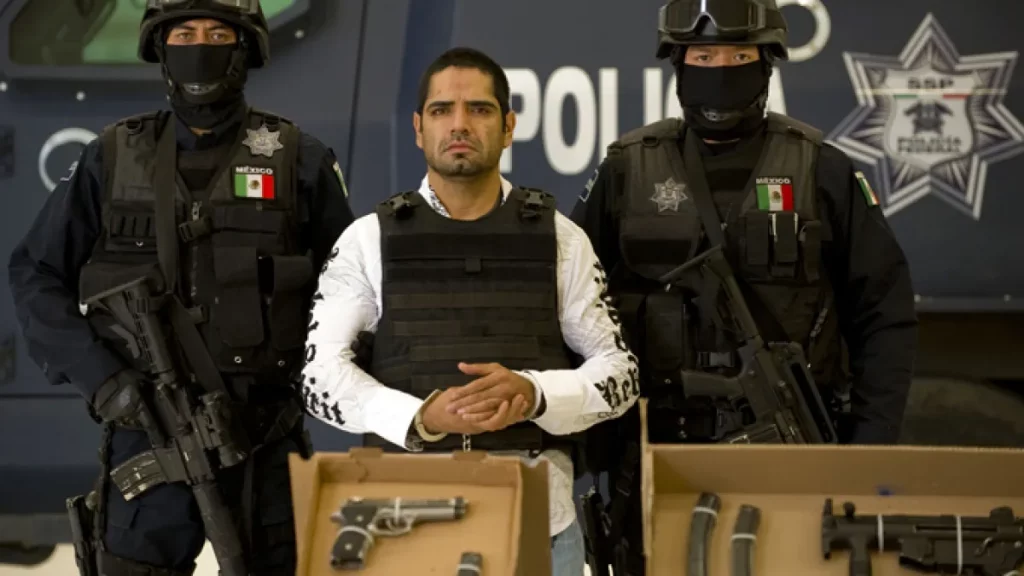
Known as “El Diego,” this former Mexican state police officer rose to become a high-ranking leader of La Línea, the armed enforcement wing of the Juarez Cartel.
His criminal activities are primarily characterized by extreme violence in the border city of Ciudad Juárez between 2008 and 2011 with him admitting to directing or participating in over 1,500 Murders.
He orchestrated the triple homicide of U.S. Consulate employee Leslie Enriquez, her husband Arthur Redelfs, and Jorge Salcido Ceniceros in Ciudad Juárez on March 13th, 2010.
He also admitted to ordering hitmen to attack a birthday party on January 30th, 2010, resulting in the deaths of 15 to 16 people, most of whom were teenagers and students.
He was allegedly behind Mexico’s first known car bomb attack against federal police in July 2010 and his operations included large-scale narcotics trafficking, money laundering, kidnapping for ransom, and extortion of businesses.
Acosta Hernández was captured in Chihuahua, Mexico, in July 2011 and extradited to the United States in March 2012 where he pled guilty to 11 counts, including racketeering, narcotics trafficking, money laundering, and weapons charges.
He was sentenced to ten life terms plus an additional 20-years in federal prison.
30 – Edgar Valdez Villarreal
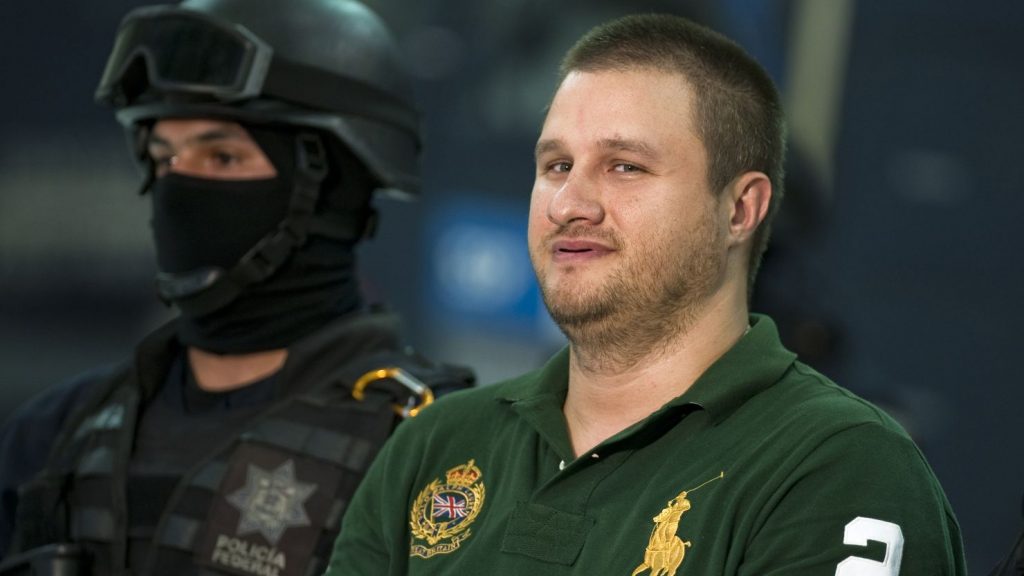
Widely known by the alias “La Barbie,” Villarreal was a prominent figure in the Mexican drug trade who rose to become a high-level leader and the lead enforcer for the Beltrán-Leyva Cartel.
His criminal career spanned over two decades, transitioning from small-scale distribution in Texas to orchestrating large-scale international trafficking operations.
Valdez led the enforcement arm of the Beltrán-Leyva Cartel and was responsible for a brutal turf war against the Zetas and the Gulf Cartel, particularly for control of the Interstate 35 smuggling route.
He is credited with popularizing the use of videotaped torture and decapitations as a means of intimidating rival gangs and the public. Following the death of Arturo Beltrán Leyva in 2009, his subsequent fight for cartel leadership allegedly resulted in over 150 deaths.
He maintained his operations by paying extensive bribes to local and federal law enforcement officials in Mexico to ensure safe passage for his drug shipments.
In 2018, Valdez was sentenced to 49 years and one month in federal prison after pleading guilty to conspiracy to Import and distribute Cocaine and conspiracy to launder money.
29 – Vincent Basciano
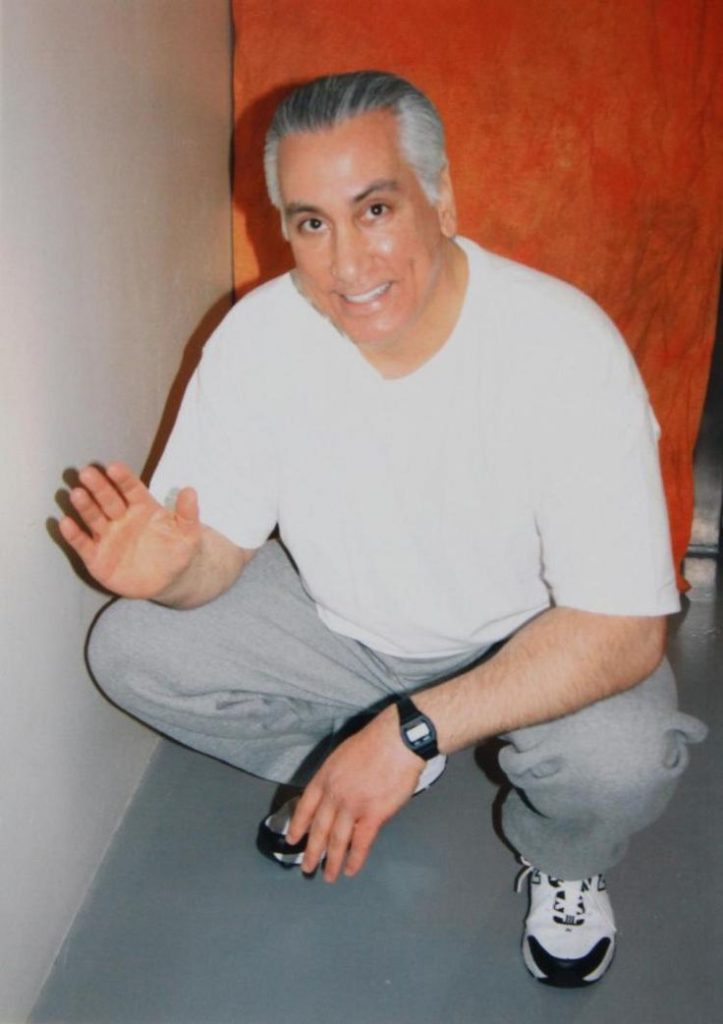
A high-ranking American mobster who served as the acting boss of the Bonanno crime family in the early 2000s, Basciano earned his nickname “Vinny Gorgeous” from owning a Bronx beauty salon called “Hello Gorgeous.”
Basciano’s criminal career is marked by his rapid rise to power following the imprisonment of boss Joseph Massino and his eventual downfall due to Massino’s unprecedented decision to become a government informant.
The most significant moment in Basciano’s criminal history was his betrayal by Joseph Massino. Massino was the first sitting boss of one of New York’s “Five Families” to break the oath of omertà and testify for the government.
While both were in federal custody in 2005, Massino wore a secret recording device during meetings with Basciano who was heard boasting about his status and explicitly admitting to giving the orders for murders.
Basciano has been convicted across multiple federal trials for a wide range of violent and organized crime activities including the murder of Frank Santoro, the murder of Randolph Pizzolo, racketeering and conspiracy and solicitation of murder.
He is currently incarcerated at USP Coleman in Florida where he is serving two consecutive life sentences without the possibility of parole.
28 – Jennifer Mee
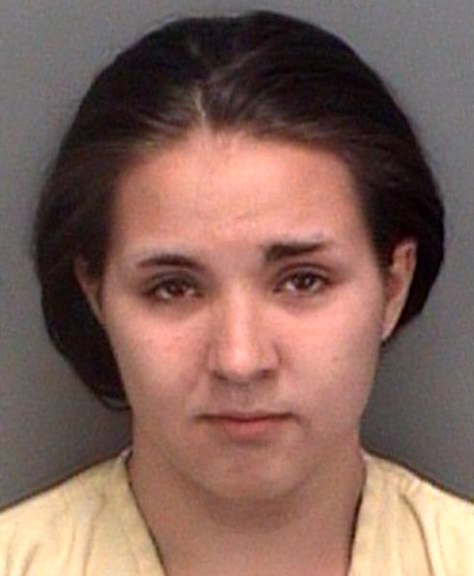
In October 2010, when Mee was 19 years old, she was involved in a robbery that resulted in the death of 22-year-old Shannon Griffin in St. Petersburg, Florida. According to investigators, Mee lured Griffin to a vacant home under the pretense of buying marijuana or going on a date.
Once they arrived at the location, Mee’s two roommates and accomplices, Laron Raiford and Lamont Newton, confronted Griffin to rob him. During a struggle, Griffin was shot several times with a .38 caliber handgun and killed. The attackers fled with less than $50.
Although Mee was not the person who pulled the trigger and was not present at the exact moment of the shooting, she was charged under Florida’s felony murder law which dictates that if someone is a participant in a dangerous felony, that results in a death, they are held legally responsible.
Key evidence included a recorded jailhouse phone call in which Mee told her mother that she had set everything up and it had all gone wrong, with forensic evidence also showing her DNA on the victim’s shirt.
Her legal team initially argued that her previous medical conditions, including hiccups as a symptom of Tourette’s syndrome, and a diagnosis of schizophrenia, affected her involvement, though she was found competent to stand trial.
In September 2013, a jury found her guilty of first-degree felony murder. Because of the nature of the charge in Florida, she received a mandatory sentence of life in prison without the possibility of parole.
Following a 2007 viral news story about her uncontrollable hiccups, Mee became widely known as the “Hiccup Girl” and is currently serving her life sentence at the Lowell Correctional Institution in Florida.
27 – Jorge Eduardo Costilla Sanchez
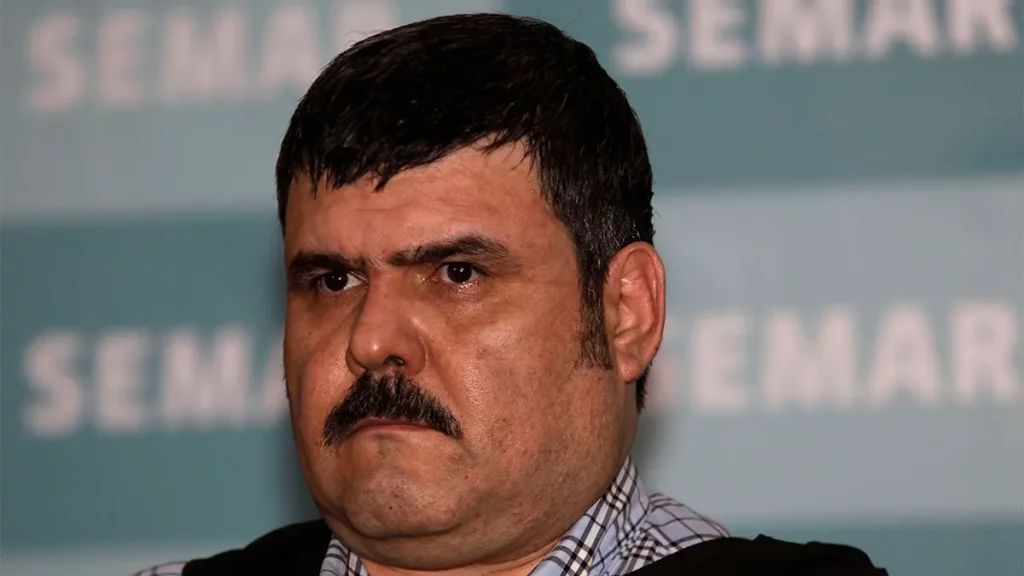
Known by the alias “El Coss,” Sanchez was a high-level leader of the Gulf Cartel in Mexico, but before his infamous rise in the criminal underworld, he served as a municipal police officer in Matamoros, Tamaulipas, from 1992 to 1995.
During his time as the day-to-day leader of the Gulf Cartel Costilla Sánchez oversaw a violent criminal enterprise that included controlling strategically important border locations to facilitate the movement of drugs.
Under his leadership, the cartel utilized an enforcement arm (originally Los Zetas) to carry out murders, kidnappings, and other acts of violence to maintain power and protect trafficking routes.
He was a key figure during the violent split between the Gulf Cartel and Los Zetas in 2010, which turned northeastern Mexico into a high-conflict zone.
He was arrested by Mexican Marines in Tampico after the Mexican government and the U.S. State Department had offered multi-million dollar rewards for his capture.
Extradited to the United States to face trial in 2015, he pled guilty to the drug trafficking and assault charges and was sentenced to life in federal prison in 2022 and ordered to pay a $5 million forfeiture judgment.
26 – Tiffany Cole
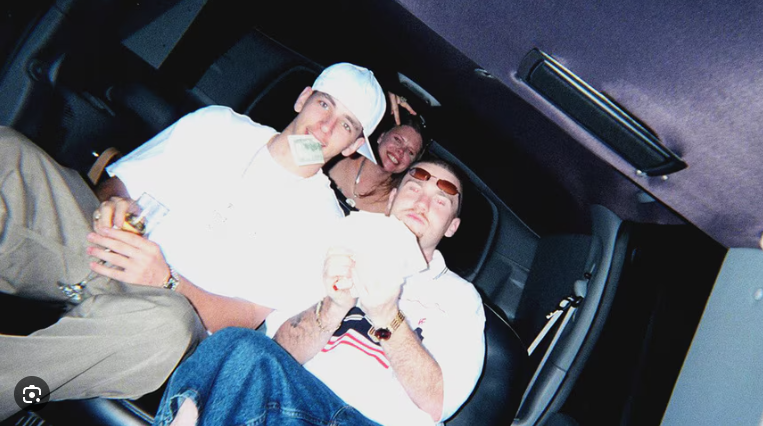
Cole was a former neighbor of Carol and Reggie Sumner in South Carolina and was later convicted for her central role in the 2005 kidnapping and murder of the couple.
Cole rented a vehicle used in the crimes and purchased supplies, including duct tape and plastic wrap, using a personal check.
Two of her accomplices gained entry to the Sumners’ home by asking to use the phone. The couple, who were both in frail health, were bound with duct tape and forced into the trunk of their own car.
The victims were driven to a remote location in Georgia where a grave had been pre-dug by the group days earlier before being forced in after revealing their ATM PIN codes.
Following the murders, the group used the victims’ ATM cards to steal money and pawned several of their items, including jewelry and a computer.
Cole was convicted in 2007 on several counts including first degree murder, kidnapping and robbery with her original death sentence overturned due to a 2016 Supreme Court ruling.
During her resentencing in August 2023, the jury voted 10-2 in favor of life, effectively sparing her from execution and she currently serves this sentence at the Lowell Correctional Institution.
25 – George Trepal

A former chemist and computer programmer with a high IQ who was a member of Mensa, Trepal was convicted in 1991 for the poisoning of his neighbors, the Carr family, in Alturas, Florida.
The main victim was his neighbor, Peggy Carr, who died on March 3rd, 1989, from thallium poisoning.
Trepal poisoned multiple bottles of Coca-Cola by carefully removing the caps, dissolving the poison, adding the solution, and then resealing the bottles.
Several other members of the Carr family, including Peggy Carr’s son and stepson, were also poisoned with thallium but survived.
The generally accepted motive was disputes with his neighbors which saw a threatening note delivered to the Carrs had received earlier, which demanded they move out of Florida or “else you will all die.”
A key part of the investigation involved Detective Susan Goreck going undercover to befriend Trepal and his wife.
Goreck posed as a friend and even arranged to rent the Trepals’ former home after they moved, which allowed a search of the property.
The search led to the discovery of crucial evidence, including A bottle of the toxic poison thallium, a heavy metallic element that is odorless and tasteless when dissolved, in Trepal’s garage.
A hand-assembled journal containing information on poisons, including thallium, and details on autopsy detection was also found to be in the possession of George Trepal.
Such was it thought by Trepal that he had got away with murder, he and his wife hosted a “Murder Mystery Weekend” soon after the poisoning, which included a storyline discussing poisoning and threatening notes from a neighbor, a scenario that eerily mirrored the real-life events.
However he was thankfully, mistaken and Trepal was convicted in February 1991. The jury recommended the death penalty by a 9-3 vote, and the circuit judge imposed the death sentence in March 1991.
24 – Craig C. Price
One of the most notorious and legally consequential juvenile crime cases in Rhode Island history, Price’s actions as a teenager led to fundamental changes in the state’s juvenile justice laws.
An American serial killer who committed his crimes in Warwick, Rhode Island, between the ages of 13 and 15, this made him one of the youngest serial killers in U.S. history.
His four victims were neighbors and all of the attacks were marked by extreme brutality.
At age 13, Price broke into the home of 27-year old Rebecca Spencer who lived only two houses away from his own and stabbed her 58 times with a kitchen knife.
Two years later he invaded the home of the Heaton Family, attacking all of them with extreme force and killing Joan Heaton and her two young daughters, Jennifer and Melissa. Price was apprehended on September 5, 1989, and calmly confessed to all four murders.
Price was charged as a juvenile in Family Court and under the existing state law, the maximum sentence a juvenile offender could receive was detention in the Rhode Island Training School until his 21st birthday.
Price began bragging that he would “make history” upon his impending release and a swift change to the law was made, often referred to as the “Craig Price Legislation.”
The new law amended the juvenile sentencing scheme to allow juvenile offenders of any age to be waived into adult court and subjected to adult penalties, including life without parole, for serious crimes, however, this change could not be applied retroactively to Price.
He has remained in custody for decades due to a series of new criminal offenses committed while incarcerated and his initial release date of October 11th, 1994 has long since passed thanks to a new 25-year sentence handed down in 2019.
23 – Cheyanne Nicole Jessie

Notable for the “cold and calculated” nature of her crimes, Jessie was convicted of the 2015 murders of her 6-year-old daughter, Meredith Jessie, and her 50-year-old father, Mark Weekly.
The case gained significant attention due to the domestic nature of the crimes and the elaborate cover-up attempt that followed with Jessie said to have shot and stabbed both victims.
Prosecutors argued that Jessie committed the murders because she believed her father and daughter were interfering with her relationship with her boyfriend and attempted to hide the crime by reporting the pair missing and providing conflicting stories to the police.
Following her arrest, Jessie underwent a lengthy legal process that included a jury in Polk County convicting her of two counts of first-degree murder and one count of tampering with physical evidence.
In July 2019, the jury unanimously recommended the death penalty for the murder of her daughter and a life sentence for the murder of her father and is currently on death row in florida.
22 – Kevin D. Foster
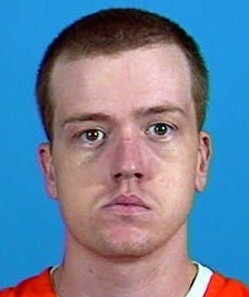
The ringleader of a self-proclaimed militia group in Lee County, Florida, known as the “Lords of Chaos.” the group’s stated purpose was to create total disorder through criminal acts.
On April 12th, 1996, in Fort Myers, Florida, Foster, along with other members of the group, went on a vandalism and arson spree.
The most severe crime was the first-degree murder of Mark Schwebes, a Riverdale High School band director. Schwebes was murdered in 1996 and the crime was committed for the purpose of avoiding a lawful arrest.
Foster was later identified as the leader and driving force behind the criminal acts of the “Lords of Chaos,” and other members, through a plea deal, agreed to testify against Foster at his trial.
Foster was convicted of first-degree murder and other related charges in 1998 with the jury recommending the death penalty by a nine-to-three vote. Foster was then sentenced to death
Foster has filed numerous appeals to overturn his conviction and death sentence, all of which have been denied by courts, including the Florida Supreme Court and the U.S. District Court, Middle District of Florida.
21 – Rachel Wade

Wade’s crimes occurred on April 14, 2009, in Pinellas Park, Florida when she and 18-year-old Sarah Ludemann had been engaged in a months-long feud over a mutual boyfriend, Joshua Camacho.
The two women harassed each other through social media, text messages, and voicemails and Wade had sent numerous threatening messages to Ludemann, including one where she explicitly stated she would be killed.
On the night of the murder, Ludemann drove to a location where Wade was staying to confront her. Wade testified that she was acting in self-defense, claiming Ludemann and her friends intended to “jump” her.
During the altercation, Wade stabbed Ludemann twice in the heart with a kitchen knife. Witnesses for the prosecution testified that Wade approached the vehicle and attacked Ludemann before she could even exit the van.
Wade’s defense team attempted to use Florida’s “Stand Your Ground” law, arguing that she feared for her life because she was outnumbered and physically smaller than Ludemann. However, the jury rejected this claim.
In July 2010, after just two and a half hours of deliberation, a jury found Wade guilty of second-degree murder and she was sentenced to 27-years in the states Lowell Correctional Institution.
20 – Markeith Loyd
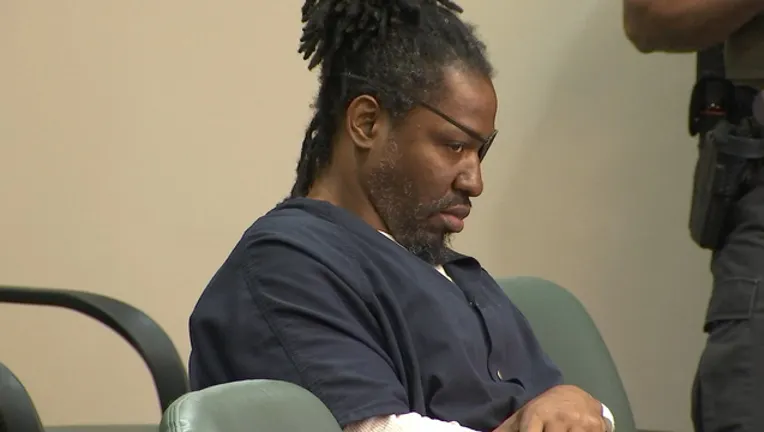
A shopper at a Walmart in Orlando recognized Loyd, who was wearing a bulletproof vest, alerted Lieutenant Clayton, who was at the store.
When Lieutenant Clayton confronted Loyd in the parking lot, he opened fire, shooting her four times.
The fatal shot was fired as he stood over her. Loyd then fled the scene, firing shots at a deputy in an unmarked car and committing a carjacking at gunpoint.
Dixon’s brother, Ronald Steward, attempted to intervene and was also shot by Loyd, sustaining a critical injury but surviving.
A massive nine-day manhunt ensued and during the search for Loyd, Orange County Deputy First Class Norman Lewis was fatally struck by a vehicle in a related traffic crash.
Loyd was captured on January 17th, 2017, in an abandoned house. He was found wearing body armor and armed. Loyd was arrested using the handcuffs of the slain Lt. Debra Clayton, a tradition to honor fallen officers.
During the arrest, Loyd sustained injuries, including the loss of an eye, after resisting officers’ commands. The officers were investigated for the use of force but were ultimately cleared of criminal wrongdoing and excessive force claims.
Loyd was ultimately charged and tried in two separate cases, the first-degree murder of Sade Dixon, the first-degree murder of an unborn child, and attempted first-degree murder of Ronald Steward. Loyd claimed he was acting in self-defense.
In the second case he faced convictions of the first-degree murder of Lt. Debra Clayton, attempted first-degree murder of another law enforcement officer, aggravated assault, carjacking with a firearm, and possession of a firearm by a convict.
Loyd was convicted and sentenced to life in prison after the jury in that case voted against the death penalty, however in the second trial a verdict of death was passed and in March 2022, a judge sentenced Loyd to death for this crime.
Still imprisoned at UCI, his death sentence is subject to the appeals process, and he has filed an appeal with the U.S. Supreme Court challenging the conviction and sentence in the murder of Lt. Clayton.
19 – Zephen Allen Xaver
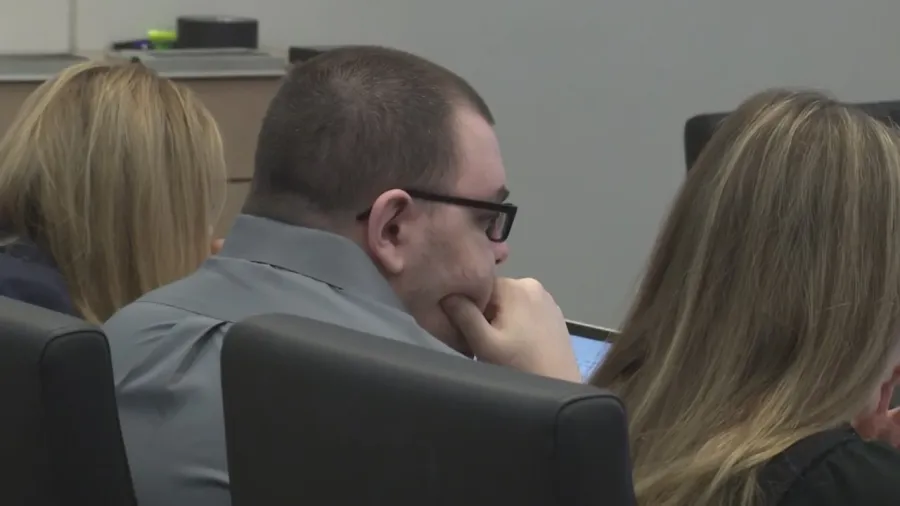
On January 23rd, 2019, at approximately 12:30 p.m., Zephen Allen Xaver, then aged 21years old, entered the SunTrust Bank in Sebring, Florida wearing a ballistic vest underneath his sweatshirt and pulled out a Springfield Armory XD 9mm handgun.
He forced a bank teller and others in the lobby to gather at a wall with their hands up and ordered the teller to lock both doors, then ordered five women to lie down on the floor face down with their heads toward the wall.
At 12:36 p.m., Xaver called the police and stated that he had shot five people and then, during the call, he fired two more shots at the bodies. The only survivor was a bank employee who had been in the break room and escaped out the back door when the shooting began.
Xaver’s stated motive was “homicidal and suicidal urges.” Minutes before entering the bank, he texted his girlfriend that he was going to die that day and kill people “just to know how it would feel.”
While negotiating with police, he also told a crisis negotiator that he was “hearing voices telling him to kill” and that pointing the gun to his head “weakened the voices.”
Xaver surrendered to police after a standoff that involved a SWAT team ramming an armored vehicle through the bank’s glass front doors. He was charged with five counts of capital murder and initially entered a plea of not guilty on February 22nd, 2019.
On March 14th, 2023, Xaver changed his plea to guilty in the shooting with prosecutors seeking the death penalty and Xaver formally sentenced to death for five counts of first-degree murder on December 16th, 2024.
18 – Trayvon Newsome
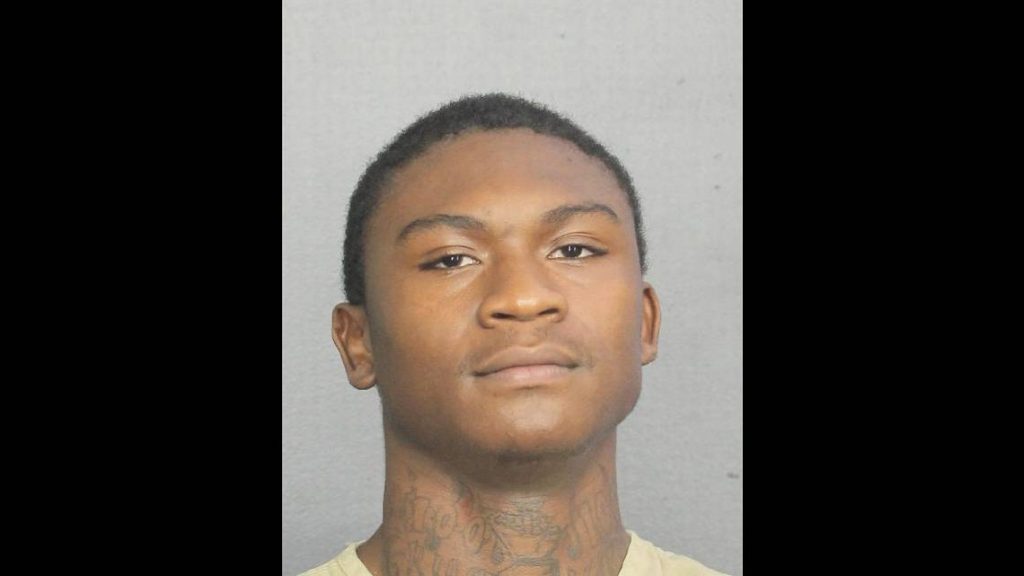
On June 18th, 2018, XXXTentacion was ambushed and shot outside RIVA Motorsports in Deerfield Beach, Florida after the rapper’s vehicle was blocked with an SUV.
Newsome and accomplice Michael Boatwright were identified as the two masked gunmen who confronted the rapper in his BMW with Boatwright identified as the shooter who fired the fatal shots.
Both gunmen robbed him of a Louis Vuitton bag containing $50,000 in cash that he had just withdrawn from a bank with prosecutors using surveillance footage from the dealership, phone data, and social media videos taken hours after the murder.
Newsome surrendered to authorities in August 2018 through his lawyer’s office and a month-long trial followed with him being found guilty alongside his co-defendants.
Trayvon Newsome is currently serving his life sentence within the Florida Department of Corrections with a fourth accomplice, Robert Allen, pleading guilty to lesser charges and helping to testify against Newsome.
17 – Courtney Schulhoff

On February 9th, 2004, Stephen Schulhoff, Courtney’s father, was beaten to death in his apartment while he slept with a Louisville Slugger baseball bat.
At the time of the murder, Schulhoff, who was 16-years old, initially claimed she was walking the dog, however investigations also began to point to her boyfriend, 20-year-old Michael Morin.
Prosecutors argued that Courtney had orchestrated the murder because her father disapproved of her relationship with Morin and had prohibited them from seeing each other.
Morin claimed Schulhoff had pressured him into the killing and had left the bat by the door for him to use and after some time, Schulhoff changed her story, claiming that she was actually the one who personally struck her father with the bat.
Schulhoff was tried as an adult and in September 2006, she was found guilty of first-degree murder, sentenced to life without the possibility of parole and later re-sentenced to 40 years in prison at the Lowell Correctional Institution.
16 – Wade Wilson
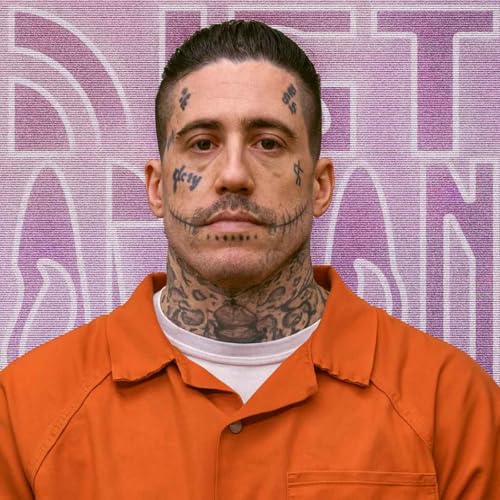
On October 7th, 2019, Wilson met Kristine Melton at a bar. He later went to her Cape Coral home, where he attacked her while she was sleeping and strangled her to death. He then stole her car.
After the first murder, Wilson drove Melton’s stolen car to his girlfriend’s business in Fort Myers. He attempted to pull her into the car, but she fought back and escaped, immediately contacting law enforcement.
Shortly after the assault, Wilson encountered Diane Ruiz, a mother of two and a bartender, walking along a street in Cape Coral. He lured her into the car, then beat and strangled her. He subsequently pushed her out of the car and repeatedly ran her over with the vehicle.
Wilson also had a prior criminal history including convictions for burglary, grand theft, and firearm theft.
While in jail awaiting trial, he was also later involved in an attempt to smuggle drugs into prison and an alleged escape attempt.
He has been referred to in the media as the “Deadpool Killer” due to his shared name with the Marvel character. In June 2024, Wilson was found guilty on all charges, including two counts of First-Degree Murder.
The jury recommended the death penalty for both murders and two death sentences were imposed in August 2024, also picking up a concurrent sentence of 12 years for the drug smuggling and conspiracy charges.
15 – Tina Lasonya Brown
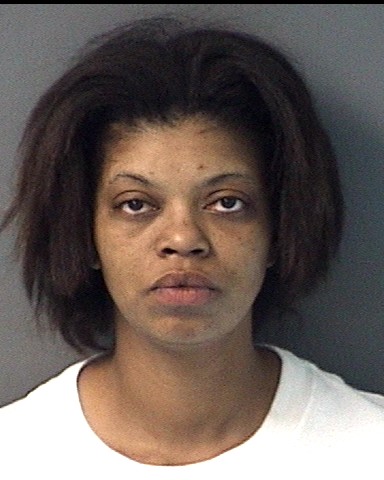
On March 24th, 2010, Brown, along with her daughter Britnee Miller and their neighbor Heather Lee, attacked 19-year-old Audreanna Redawn Zimmerman.
The attack was reportedly motivated by prior personal conflicts between the women.
Brown lured Zimmerman to her home under the guise of friendship.
Once inside, Zimmerman was beaten with a crowbar and shocked multiple times with a stun gun.
The victim was then forced into the trunk of a car and driven to a nearby wooded area where the perpetrators attempted to murder Zimmerman with gasoline.
She managed to escape despite her severe injury’s and sought help from a nearby resident, but sadly died 16-days later on April 9th, 2010, due to severe burns covering a significant portion of her body.
In June 2012, an Escambia County jury found Brown guilty of first-degree premeditated murder and was sentenced to death on September 28th, 2012.
She is currently incarcerated at the Lowell Correctional Institution and has been noted as one of the few women on Florida’s death row.
During her trial and subsequent appeals, Brown’s defense presented evidence of significant personal hardship, including a history of childhood abuse, abandonment, and trauma. however, all appeals have been denied.
14 – Sarah Boone
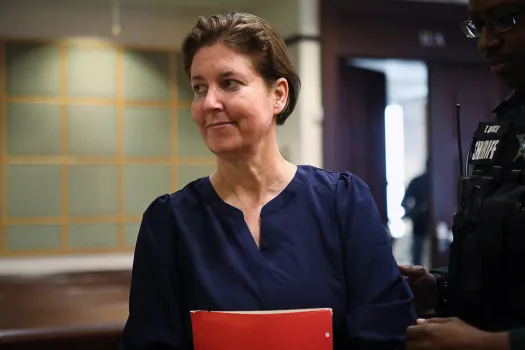
Convicted and sentenced to life in prison for the 2020 murder of her boyfriend, Jorge Torres Jr., Boone called 911 on February 24th, 2020, to report that Torres was dead in their Winter Park apartment.
She initially claimed that after a night of drinking, they played a game of hide-and-seek and thought it would be “funny” to see if Torres, who weighed approximately 103 lbs, could fit inside a blue suitcase.
Boone stated she zipped the suitcase shut, went upstairs to bed, and fell asleep, assuming Torres could get out on his own, however Torres died of suffocation after failing to free himself.
Investigators soon discovered the real reason for the crime with two videos on Boone’s phone recorded the night of the incident showing her striking the suitcase with a baseball bat when Torres tried to escape.
Despite the evidence against her, she pled not guilty at trial, however a jury found Boone guilty of second-degree murder and she was sentenced to life in prison without the possibility of parole.
Her defense team argued she suffered from “battered woman syndrome” due to a history of domestic violence in the relationship. Boone testified in her own defense, claiming she acted out of fear and never intended to kill him.
The case was notable for having 13 different attorneys over the course of the proceedings. Many court-appointed lawyers withdrew due to conflicts or Boone’s behavior, leading the judge at one point to rule she had forfeited her right to court-appointed counsel.
As of late 2025, she has been involved in filing handwritten motions regarding the status of her appeal and expressing frustration over a lack of communication from her current appellate attorney.
13 – Gary Hilton
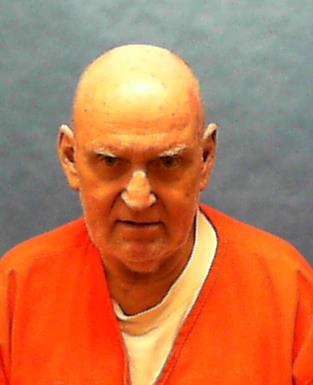
Known as “The National Forest Serial Killer,” Hilton was responsible for at least four homicides between 2007 and 2008 in national forests across three states.
His victims were typically hikers or outdoors enthusiasts in remote areas. His modus operandi often involved kidnapping and robbing his victims using their ATM cards before killing them.
Victims included John and Irene Bryant from North Carolina, Cheryl Dunlap from Florida and Meredith Emerson from Georgia with Hilton arrested shortly after her murder after she left a digital trail for police by repeatedly giving Hilton the wrong PIN.
Hilton faced convictions and sentencing in three different states and at the federal level and he is a suspect in many other similar-style killings over the same time period.
Hilton pleaded guilty to the murder of Meredith Emerson and was sentenced to life imprisonment, he was further was convicted of the murder of Cheryl Dunlap in April 2011 and received a death sentence.
Hilton pleaded guilty to the murders of John and Irene Bryant, as well as related federal charges, including kidnapping, robbery and the use of a firearm during a crime of violence for which he received four more life terms without parole.
12 – Manuel Noriega
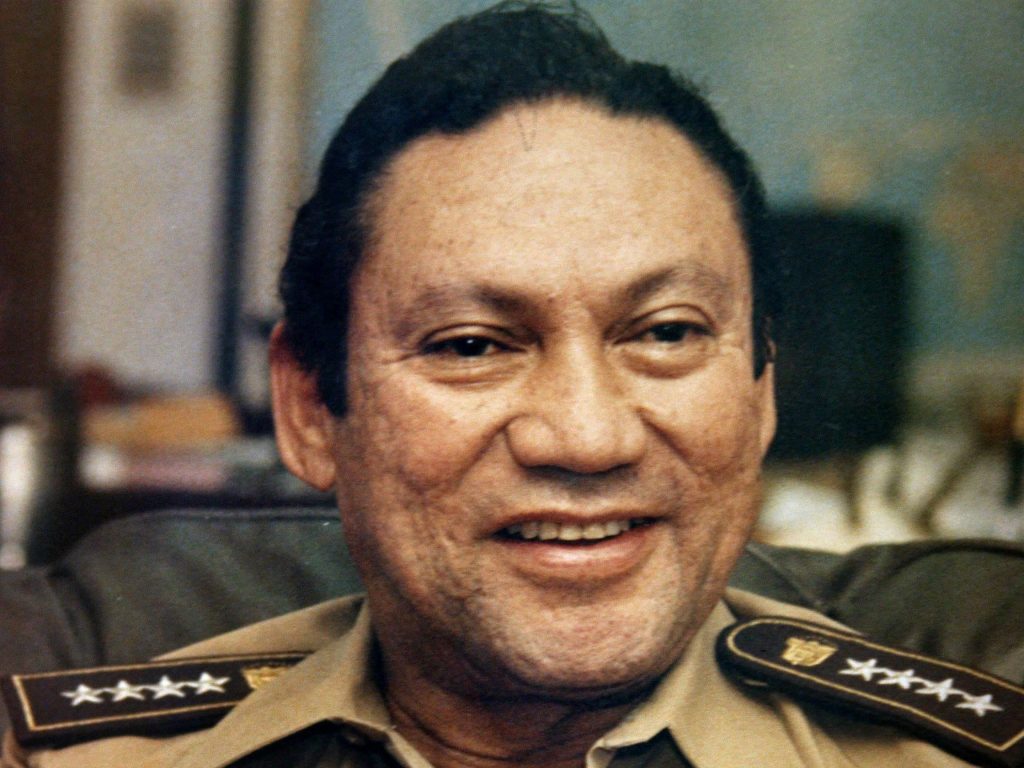
Military dictator and de facto ruler of Panama from 1983 until 1989, Noriega rose through the ranks of the Panamanian military under his mentor, General Omar Torrijos.
After Torrijos’s death in 1981, Noriega consolidated power, taking command of the Panamanian Defense Forces and effectively ruling the country through puppet presidents.
For decades, he was a paid informant for the CIA, assisting in Cold War operations throughout Latin America. However, he simultaneously enriched himself through illegal activities that eventually led to a total breakdown in his relationship with Washington.
His career was marked by a complex relationship with the United States, transitioning from a key intelligence asset to a high-profile criminal defendant.
In December 1989, tensions reached a breaking point after Noriega’s government declared a “state of war” with the U.S. and a U.S. Marine was killed by Panamanian forces.
President George H.W. Bush launched Operation Just Cause, a massive military invasion to capture Noriega and restore the results of the 1989 election, which Noriega had annulled.
Noriega sought refuge in the Vatican Embassy in Panama City. To force his surrender, U.S. troops used psychological warfare, including blasting high-decibel rock music at the compound around the clock. He surrendered on January 3rd, 1990.
Granted prisoner-of-war status, he served his sentence in Florida and died on May 29th, 2017, in Panama City at the age of 83, but was one of the most famous inmates in the Florida corrections system.
11 – Joseph Manuel Hunter
Often known by the nickname “Rambo,” Hunter is a former U.S. Army sergeant and sniper instructor who became a mercenary and contract killer for a global criminal organization.
Hunter was a key figure in a murder-for-hire scheme. He was specifically convicted for his role in the February 2012 execution-style killing of Catherine Lee, a real estate agent in the Philippines. Hunter recruited other former soldiers to carry out the hit because his boss believed Lee had cheated him.
In 2013, Hunter was targeted in a DEA sting operation. He agreed to assemble a “security team” to protect what he believed were Colombian drug traffickers and conspired to assassinate a DEA Special Agent and a confidential informant in Liberia.
Prosecutors established that Hunter participated in and oversaw numerous other acts of violence, including kidnappings, shootings, and torture, often bragging about his ability to kill.
He was convicted of conspiracy to import large quantities of cocaine into the United States as part of his work for the purported drug organization.
Hunter was initially sentenced to 20 years in prison for the plot to kill the DEA agent and drug trafficking charges but later received life in prison without the possibility of parole for his murder of Catherine Lee.
During his trials, his defense team cited Post-Traumatic Stress Disorder resulting from his 20-year military career as a mitigating factor, though the court ruled this did not excuse his crimes.
10 – Ashley McArthur
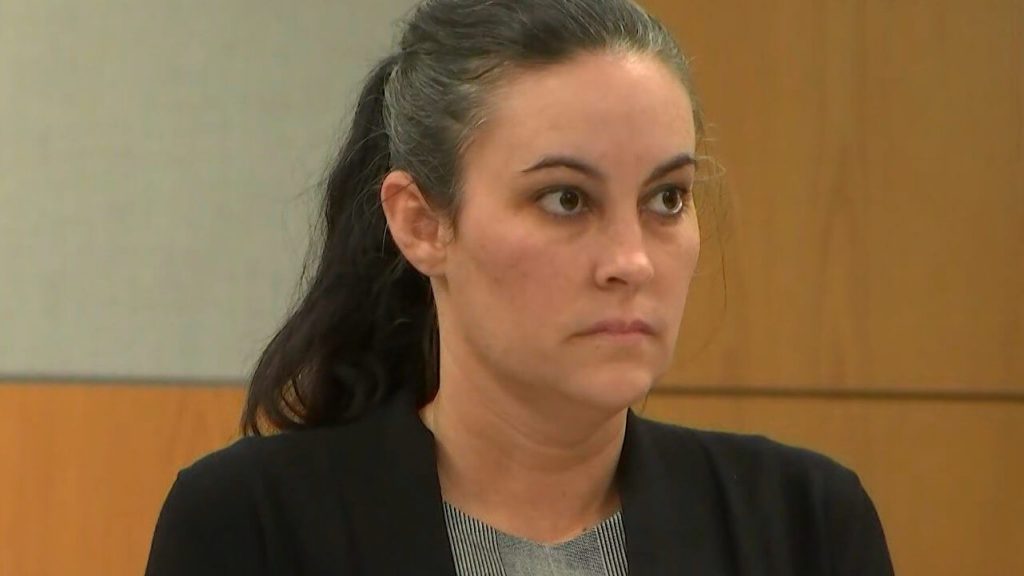
Ashley McArthur is a former crime scene technician from Florida who was convicted of the 2017 murder of her close friend, Taylor Wright, a 33-year-old private investigator and former police officer.
Taylor Wright was in the middle of a difficult divorce and entrusted McArthur with $34,000 for safekeeping. Instead of holding the money, McArthur deposited the funds into her own bank account and spent them on personal expenses, including gifts for a man she was having an affair with.
When Wright attempted to retrieve her money for a court hearing, McArthur lured her to a remote family farm in Cantonment, Florida. Prosecutors alleged that McArthur shot Wright in the back of the head.
Using her professional knowledge as a former CSI, McArthur attempted to hide the body and mislead investigators, burying Wright’s remains under concrete and potting soil along a fence line on the property.
She sent texts from Wright’s phone to Wright’s girlfriend to make it appear as though she had simply run away to get her life on track, however, surveillance footage captured McArthur purchasing concrete and soil at a Home Depot.
She was later found guilty at trial and sentenced to life in prison with with a mandatory minimum of 25 years along with another 7 years in state prison for racketeering and fraud.
9 – Tony Ables
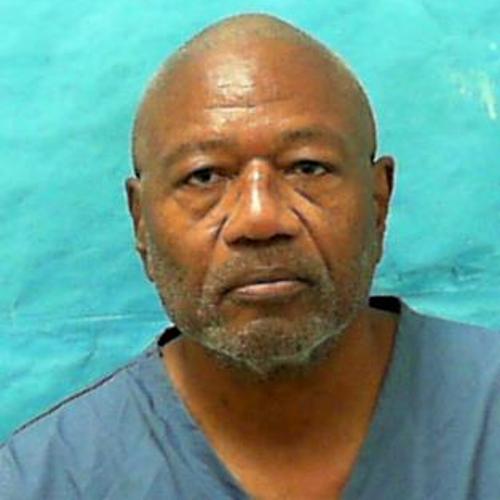
Ables’ criminal history is characterized by a violent escalation over several decades, often targeting women with whom he had personal relationships.
At age 16, Ables was involved in a robbery in St. Petersburg during which a man was killed. He pleaded guilty to first-degree murder in 1971 and was sentenced to life in prison.
After serving 12 years, Ables was paroled in early 1983. Five months later, 83-year-old Adeline McLaughlin was found suffocated in her retirement hotel apartment. The case remained cold for over 20 years until 2006, when DNA evidence on the victim’s body was matched to Ables.
Abled killed again, this time in 1997 after meeting Deborah Kisor who became his girlfriend. Her body was found near a park bridge in St. Petersburg, but like the McLaughlin case, was not solved until DNA evidence was produced in 2006.
Ables was caught after the murder of Marlene Burns when witnesses saw him pushing his 48-year-old girlfriend down a flight of stairs and subsequently beating her to death.
Ables’ legal proceedings were marked by debates over his mental state and traumatic upbringing, but he was found guilty and the jury voted 8–4 in favor of the death penalty and Ables is currently serving his life sentence at the South Bay Correctional Facility.
8 – Grant Amato
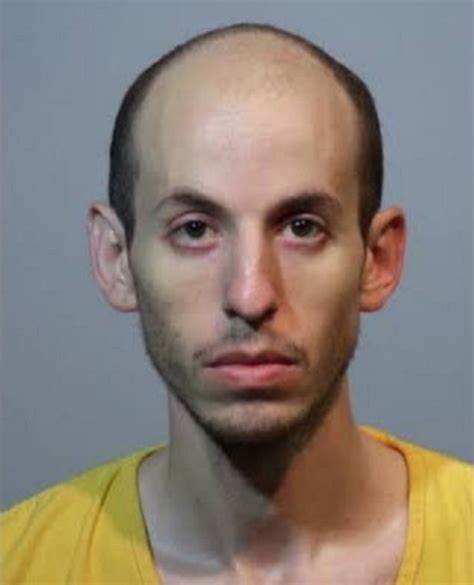
The tension in the Amato household began when Grant developed a “parasocial” relationship with a webcam model named Silviya Ventsislavova.
Over several months, Grant stole more than $200,000 from his family, including his father’s retirement savings and his brother’s investment accounts, all used to pay for private sessions with the model.
His family attempted to help him, paying $15,000 for a stint at an internet and pornography addiction rehabilitation center, but when he returned, his father gave him a strict ultimatum, find a job, pay back the debt, and cease all contact with Silvie.
On January 24, 2019, Chad Amato discovered that Grant had secretly used his mother’s phone to contact the model and ordered Grant to leave the house immediately.
Grant returned to the family home in Chuluota, Florida, and carried out the murders of his mother, Margaret, his father, Chad and his brother, Cody.
Prosecutors argued that Grant attempted to stage the scene to look like a murder-suicide committed by his brother and later used his father’s credit card to purchase $600 worth of more tokens for the model.
He was captured the following day at an Orlando hotel and his only surviving immediate family member, his half-brother Jason, gave emotional testimony at his trial.
Found guilty on July 31st, 2019, of three counts of first-degree premeditated murder, Grant Amato was Sentenced to three consecutive life terms without the possibility of parole and currently resides at the Tomoka Correctional Institution.
7 – Leon Davis Junior
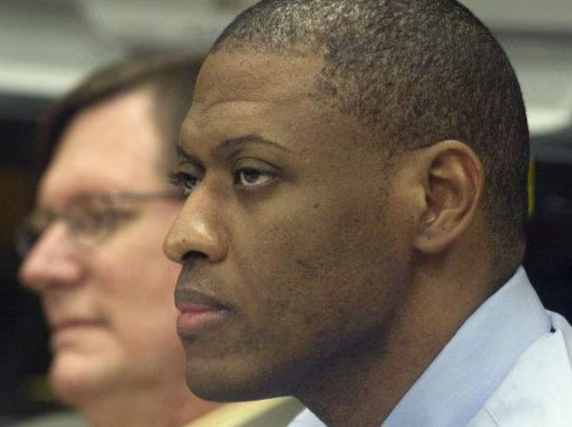
Davis committed a series of violent crimes, including two double homicides, over a one-week period in December 2007, motivated by financial distress.
The first attack, at a BP gas station and convenience store in Lake Alfred, Florida saw Dashrath and Pravinkumar Patel, two store clerks killed.
Davis drove to the store with the intent to rob it. During the attempted armed robbery, he fatally shot both clerks. He was also charged with attempted first-degree murder of another individual at the scene.
The second attack, at Headley Insurance Agency in Lake Wales, Florida saw victims Juanita Luciano and Yvonne Bustamante along with Luciano’s unborn child killed.
Davis was convicted of a total of five murders of the four women and one unborn child, along with multiple counts of attempted murder, armed robbery, attempted armed robbery, arson, and grand theft.
He was handed two death penalty convictions, something which he has challenged in various court appearances along with a writ of habeas corpus, arguing issues such as ineffective assistance of counsel and violations of discovery rules.
6 – Daniel Conahan
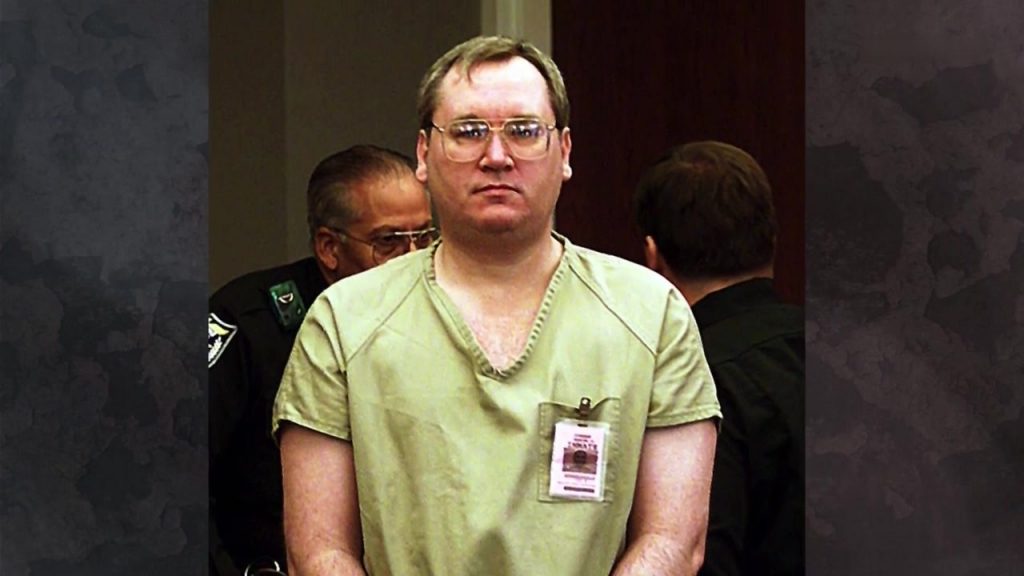
Known as the “Hog Trail Killer” for the series of murders he is believed to have committed in the woods and remote areas of Charlotte County, Florida, Conahan is suspected of eight murders between 1993 and 1996.
He would often lure his victims, many of whom were hitchhikers or homeless, with the promise of money in exchange for posing nude for photographs that he would take.
Conahan, a licensed practical nurse and Navy veteran, was arrested in July 1996 after being linked to the crimes through an individual who escaped him and a prior police report from the Stanley Burden incident.
Conahan was tried and convicted for the 1996 kidnapping and first-degree murder of Richard Alan Montgomery whos body was discovered in a remote trash dump.
A crucial piece of evidence in his trial came from a survivor, Stanley Burden, who testified that Conahan had similarly lured him in 1994, tied him to a tree, assaulted him, and attempted to strangle him for an extended period before eventually giving up and leaving.
For the murder of Richard Montgomery, Conahan waived his right to a jury trial for the guilt phase, electing a bench trial. The trial court ultimately found him guilty of first-degree premeditated murder and kidnapping.
The sentencing phase, conducted before a jury recommended the death penalty in a unanimous vote with the judge formally sentencing Daniel Conahan to death on December 10th, 1999.
5 – William Zeigler
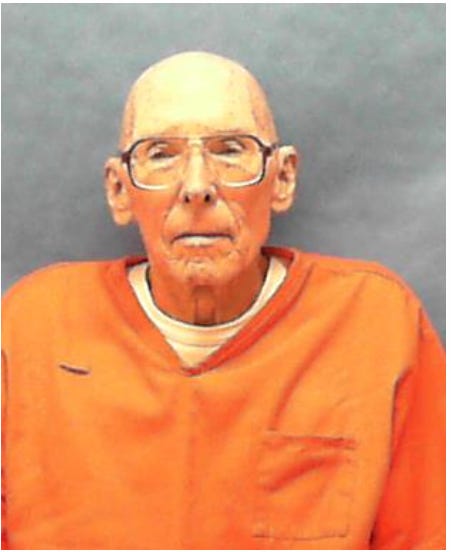
A key figure in a highly controversial and decades-long Florida murder case, William Thomas “Tommy” Zeigler Jr. was convicted for the 1975 murders of four people and has been incarcerated on death row since 1976.
The quadruple murder occurred on Christmas Eve, December 24th, 1975, at the W.T. Zeigler Furniture Store in Winter Garden, Florida, which William Thomas Zeigler Jr. owned.
Zeigler’s wife, Eunice Zeigler; her parents, Perry and Virginia Edwards; and a customer, Charlie Mays were all brutally murdered and Zeigler was also found at the scene with a gunshot wound to his abdomen.
The State argued that Zeigler planned and committed the murders, staging the scene to look like a robbery gone wrong involving Charlie Mays and two other men and prosecutors alleged the motive was to collect on two life insurance policies linked to his wife at over $500,000.
Zeigler has always maintained his innocence, claiming he was the victim of a robbery and that he was shot after walking in on a burglary. The trial became so newsworthy, it was moved to Jacksonville, Florida
In July 1976, a jury convicted Zeigler of two counts of first-degree murder and two counts of second-degree murder
Although the jury recommended a sentence of life imprisonment, the trial judge, Maurice M. Paul, overrode the jury’s recommendation and sentenced Zeigler to death for the first-degree murders and life imprisonment for the second-degree murders.
Zeigler’s death sentence was overturned in 1988 due to an error regarding mitigating circumstances. However, he was re-sentenced to death by a judge in 1989, again overriding a jury recommendation of life.
Zeigler has had his execution scheduled and subsequently stayed on multiple occasions in both 1982 and 1986 and the timely filing of federal habeas corpus claims has been repeatedly held up.
In January 2025, his attorneys filed a motion for a new trial, claiming the fresh DNA analysis supports Zeigler’s version of events and points to another man as the killer, but, for now he remains on death row.
The case has been widely criticized over the years, with claims of an inadequate investigation, improper evidence handling, suspect witness testimony, and a conflict of interest involving the original trial judge.
4 – Emilia Carr
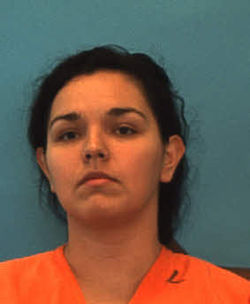
On February 15th, 2009, Joshua Fulgham, Heather Strong’s estranged husband, lured Heather Strong to a storage trailer on property where Carr lived, under the pretense that money was hidden there.
Heather had been in a love-triangle with Carr and Fulgham, but after arriving was attacked by both and died of asphyxiation.
Strong’s body was placed in a suitcase and buried in a shallow grave near the trailer. Her remains were discovered by investigators in March 2009 after Fulgham led police to the site.
Carr initially denied involvement but eventually gave multiple conflicting statements to police. She was eventually recorded in a conversation with Fulgham’s sister admitting to her role in the killing.
Witnesses testified that Carr had previously offered people $500 to help her kill Strong and had once threatened Strong with a knife to force her to drop assault charges against Fulgham.
Carr was convicted in December 2010 of first-degree murder and kidnapping and was sentenced to death, becoming one of the youngest women on death row in the United States. She is currently serving her life sentence at the Lowell Correctional Institution.
3 – Frederick Martin Davidson
On August 15th, 1996, Davidson, a 36-year-old engineering graduate student and Army veteran, arrived at his thesis defense with a 9mm handgun hidden inside a first-aid kit. Shortly after the presentation began, he opened fire on the faculty committee.
The victims were all respected engineering professors including 32-year old Dr. Chen Liang, 44-year old Dr. D. Preston Lowrey III and 36-year old Dr. Constantinos Lyrintzis.
Davidson believed there was a conspiracy within the engineering department to fail him and prevent him from finding employment.
Investigations revealed he was suffering from paranoid delusions; he reportedly felt “enslaved” by the workload and pressured by the requirement of a successful defense to secure a job offer.
To avoid the death penalty and spare the families a lengthy trial, Davidson pleaded guilty. In 1997, he was sentenced to three consecutive life terms without the possibility of parole.
2 – Wayne C. Doty
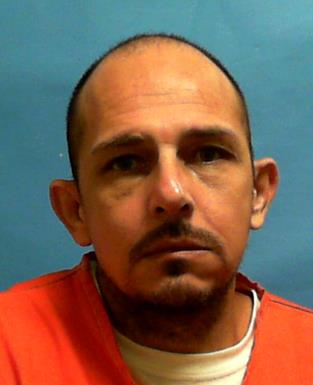
On April 20th, 1996, Doty shot and killed Harvey Horne II, a 34-year-old night watchman at a manufacturing plant in Plant City, Florida, during a drug-related robbery.
While serving his life sentence for this murder at Florida State Prison, Doty committed a second murder on May 17th, 2011, when he, and accomplice William Wells lured 21-year-old inmate Xavier Rodriguez into a secluded interview room.
They tricked Rodriguez into being bound with “Coast Guard handcuffs” and Doty then placed Rodriguez in a chokehold until he lost consciousness before stabbing him approximately 23 times with a homemade knife.
After the killing, Doty and his accomplice took showers, smoked a cigarette, and then called a sergeant to confess to the crime. Doty stated the motive was a dispute over stolen tobacco and name-calling.
Doty’s legal path has been notable for his repeated efforts to bypass the appeals process and expedite his execution which was received after the second killing.
In 2015, Doty became the first Florida inmate in decades to formally request the electric chair as his method of execution instead of lethal injection, citing his desire for “spiritual freedom” and a faster resolution to his case.
Doty is currently incarcerated at the Union Correctional Institution Death Row wing where he is kept in complete solitary confinement.
1 – William Edward Wells
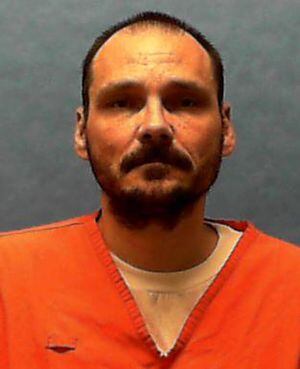
Notoriously dubbed the “Monster of Mayport,” William Edward Wells has a criminal record that is marked by extreme violence both in the community and within the state prison system.
In May 2003, Wells committed five murders over a nine-day period at his mobile home in Mayport, Florida, with victims including his wife, her father, her brother, and two other men.
Wells pleaded guilty to these five murders to avoid the death penalty and was sentenced to five consecutive life sentences without the possibility of parole.
While serving his life sentences at Florida State Prison, Wells continued to commit violent acts against fellow inmates including the attempted premeditated murder of another prisoner, resulting in an additional life sentence.
During the 2011 murder of prison inmate Xavier Rodriguez, Wells acted as an accomplice to inmate Wayne Doty and as was handed a seventh life sentence for this crime.
Wells and another inmate, Leo Boatman, planned and executed the murder of William Chapman in a prison dayroom in 2019. They secured the door to prevent guards from intervening and engaged in a brutal 12-minute assault involving ligatures and shanks.
Thanks for reading this article on the most dangerous prisoners in Florida prisons, remember to check out our YouTube channel for more great videos on prison topics.
Related posts:
 46 Most Dangerous Prisoners At ADX Florence Prison
 Top 50 Most Dangerous And Secure Prisons In The World
 Top 10 Most Dangerous Female Prisoners In Bronzefield Prison UK
 8 Cold-Blooded Convicts: The Most Infamous Inmates In Low Newton
 Top 10 Most Dangerous Prisoners Held In Full Sutton Prison
 10 Terrifying Inmates: The Deadliest Secrets on Indiana Death Row